
There is a specific kind of dread that arrives quietly.
Not the dramatic fear of dying, which at least has the decency to announce itself.
This is smaller, and it comes in the middle of an ordinary Tuesday, usually around the third or fourth hour of doing something that doesn’t matter.
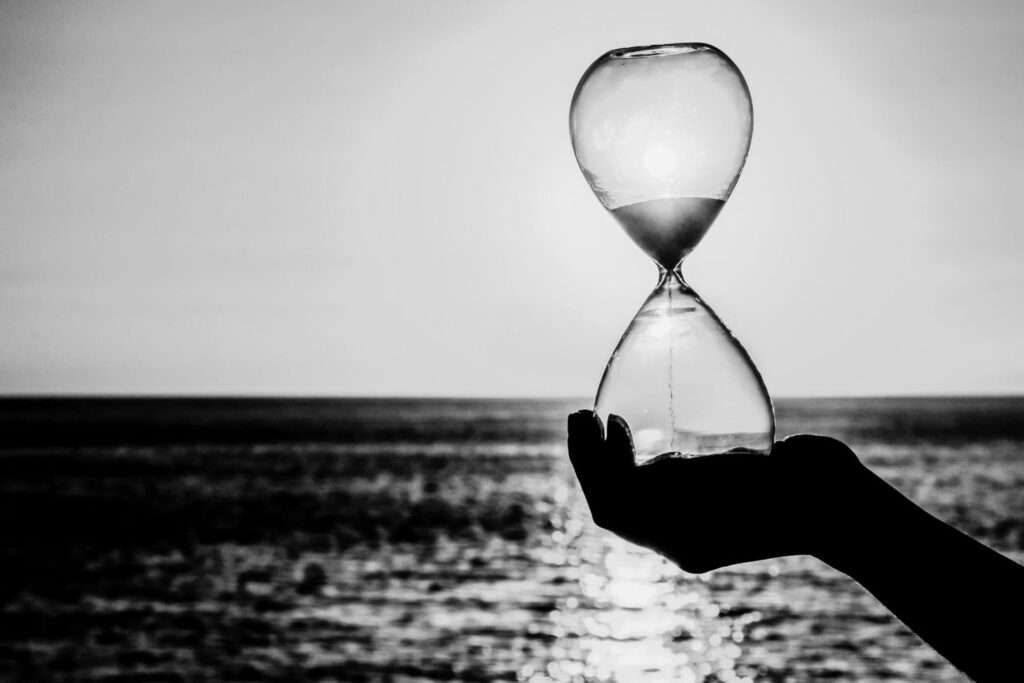
You look up and feel, for a moment, that time has already been happening to you for a very long time.
I’ve noticed that most people respond to this feeling by accelerating.
More plans, more projects, more lists of things that will eventually prove they’ve been present.
The productivity industry exists almost entirely to service this anxiety.
If you optimize enough, the logic goes, you can outrun the clock.
You cannot.
The clock doesn’t care about your system.
The Roman philosopher Seneca, writing letters to a friend he’d probably never see again, put it with the directness of someone who had run out of patience for euphemism.
Most people aren’t short of time, they allow it to be taken from them.
What he described in the first century still applies with embarrassing precision.
The mechanism has changed, the result hasn’t.
Calling time an enemy is already a mistake, and a costly one.
You don’t deal with an enemy by making peace, you deal with it by understanding what it actually is.
Time isn’t against you, it’s simply indifferent.
It moves at its own pace regardless of what you’re doing with it, and arguing with that indifference is one of the least productive things a person can choose to do.
What you can do, and this is the only real answer to the fear, is decide that you are using time rather than being used by it.
That distinction sounds abstract until you try to live it.
Using time means having a direction.
Not a vague sense of where you’d like to be eventually, but a specific enough goal that you can break the path into stages, look at a week and know what it’s for, and finish a day with something other than a vague sense of motion.
The goal doesn’t have to be enormous, it has to be yours.
It has to be honest.
A goal you’ve borrowed from someone else’s idea of a successful life is just another way of letting time happen to you.
When you have a real direction, something changes in how you experience the hours.
Not magically, not all at once, but gradually.
You stop looking at time as a substance that depletes and start treating it as a medium, the way a builder treats concrete or a musician treats silence, you shape it.
You can look back at a month and point to something that wasn’t there before.
This is what self-respect actually feels like from the inside: not pride exactly, but the quiet recognition that you walked logically, that the effort was real, that you did not pretend.
The fear of time passing is also, underneath the surface anxiety, a fear of having made nothing.
That’s worth sitting with, because if that’s what it is, then the answer is to make something, not to calm down.
But here is the part that the productivity conversation almost always misses: not all of the making is external.
There is a kind of time that doesn’t follow the rules of output and progress, it doesn’t accumulate in ways you can measure or display.
A dimly lit room, an evening that stretches without agenda, the specific quality of quiet that comes when you’re lying next to someone whose presence you find genuinely restoring, not performing intimacy, just existing in it.
These moments are not a break from time well spent.
They are some of the most valuable uses of it available to a human being.
The heart, if you want to use an old-fashioned word for the part of you that loves things and is damaged by their absence, requires this kind of input.
You can run on pure ambition for stretches of time that feel impressive until they don’t.
Eventually the architecture that holds everything else up starts to show cracks.
The person who has built a life entirely around measurable progress and ignored the other register often discovers, at some inconvenient moment, that they have become very efficient and entirely hollow.
Loving well, being loved, and allowing yourself to be actually present in both, is not a luxury you earn after you’ve accomplished enough, it’s load-bearing, it keeps the rest of the structure standing.
Heidegger argued that most of us move through life in a kind of managed distraction, going through the motions of das Man, the anonymous “one,” doing what one does, filling the hours with the socially approved.
It takes something like confronting the finite nature of your own existence to cut through that noise and produce something closer to clarity.
What you want, what actually matters to you, what you’d be willing to defend as a real use of a human life.
Not everyone arrives at this through philosophy.
Some people arrive through illness, or loss, or a particular Wednesday afternoon when the dread shows up uninvited and something finally shifts.
The shift, when it comes, is not dramatic.
You don’t resolve the fear, you stop arguing with the premise.
Time is a fact. It moves in one direction.
You were given some amount of it, unknown, non-negotiable, and the question of what to do with it is the only question that has ever really been in front of you.
Build what you intend to build.
Love the people worth loving, and let that be a full act, not an afterthought.
Let the quiet moments be quiet.
Stop mistaking occupation for use.
The goal isn’t to fill every hour, it’s to be able to look at the hours you’ve had and find something there other than noise.
That’s as close as anyone gets to winning an argument with time.
Not defeating it.
Just refusing to waste it on the wrong kind of fear.
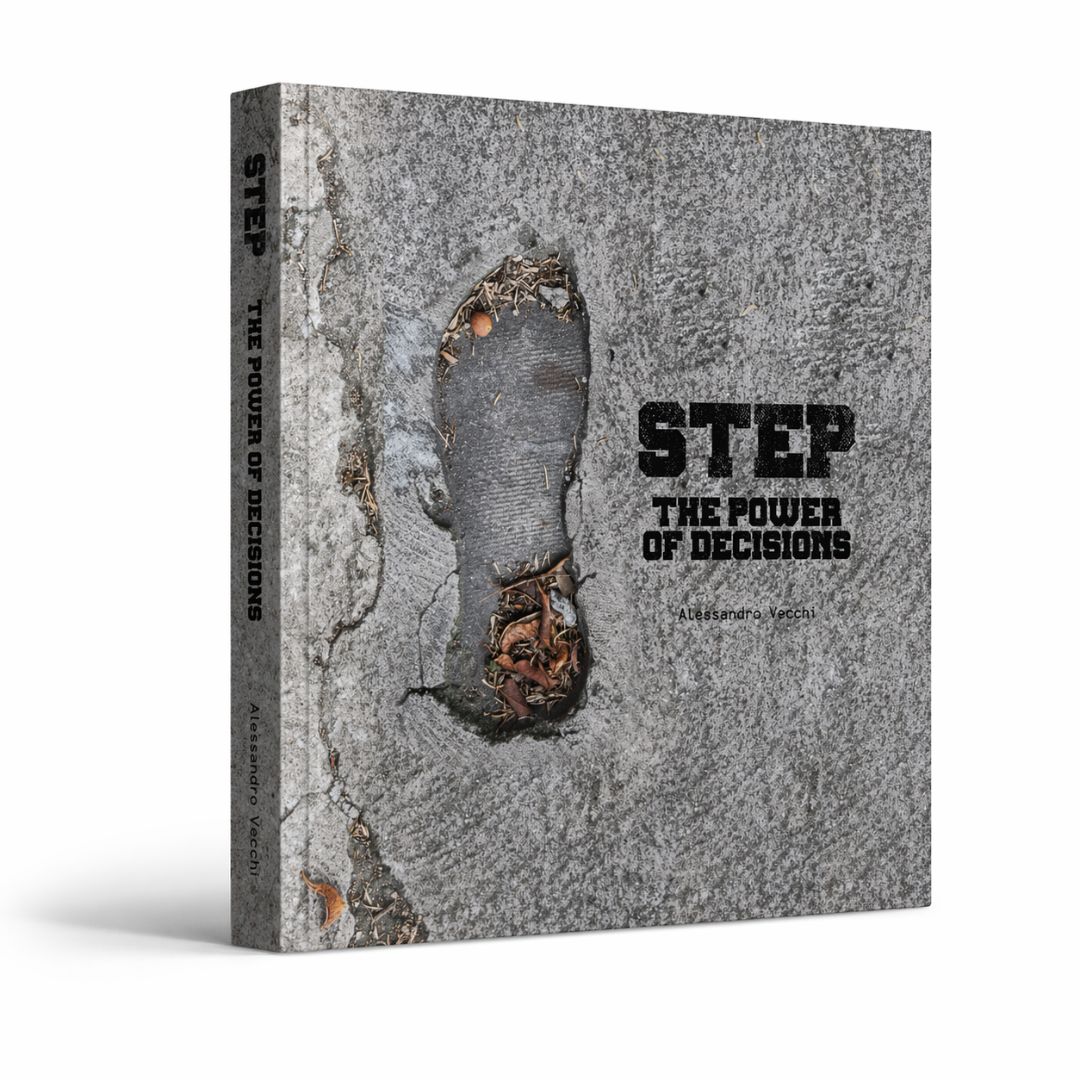
Every life is the sum of its steps. Not the grand ones, the quiet, daily ones we barely notice making. STEP is a visual and narrative journey through the architecture of personal choice. How decisions accumulate, how resilience isn't a gift but a response, and how self-discovery doesn't arrive announced, it shows up in the rearview mirror.
Through a blend of photography and reflection, this book offers a mirror. For those willing to look at the choices that brought them here, and the ones still ahead.