
There is a moment, usually sometime in the afternoon, when you feel it, that specific weight of feeling behind all the time.
Not tiredness exactly, something older.
The sense that you are already behind, that you were behind before the day began, that no matter what you clear from the list, the list has already grown somewhere you are not looking.
You are around forty.
You remember life before this.
Not as nostalgia, but as a physical memory, the texture of an afternoon with nothing in it, a phone call that ended when the conversation ended, a newspaper you could finish.
That life did not feel slow, it felt like the right speed.
The speed at which things could be understood before the next thing arrived.
That world did not disappear, it was replaced by an architecture.
The platforms are not neutral containers for information, they are systems designed by engineers whose only metric is time-on-screen, and who discovered early that the most efficient way to keep attention is to make people feel slightly behind.
Not panicked, or despairing, just slightly behind.
Enough to keep checking, to keep scrolling.
Pascal wrote in the seventeenth century that all of humanity’s problems stem from the inability to sit quietly in a room.
He meant it as a comment on restlessness, on the soul that cannot bear itself.
Pascal could not have imagined the room being redesigned to make stillness structurally impossible, the walls covered in notifications, the floor vibrating with updates, the air full of content that presents itself as urgent and then means nothing by evening.
McLuhan said the medium is the message.
What the smartphone communicates, regardless of what you read on it, is that there is always more, and you are always slightly late.
That is the message.
Not the news, not the posts, not the content.
The feeling of lag is the content.
This is not a metaphor.
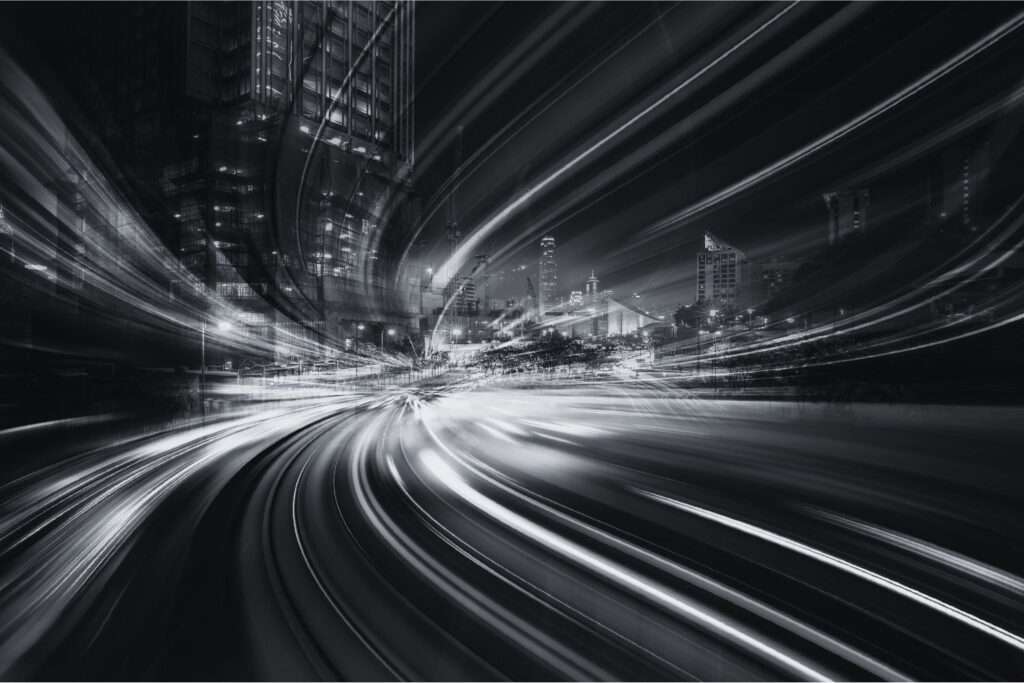
The feeling that the world is running thirty thousand kilometers an hour faster than your best effort is not a sign of weakness or disorganization.
It’s the designed output of systems that profit from it.
The capital that funds these platforms does not benefit from your sense of sufficiency.
It benefits from your sense of deficit.
Your peace is not monetizable, your anxiety is.
And yet knowing this changes almost nothing about how it feels.
You can understand the mechanism perfectly and still feel the pull of the notification, still feel the low hum of guilt when you step away from a screen.
Knowledge is not the same as relief.
Byung-Chul Han calls this the burnout society, a civilization that has replaced external compulsion with internal compulsion, so that you police your own attention with more efficiency than any overseer could manage.
You are not overworked, you are overworkable, and you do it to yourself, and you know it, and you keep going.
The generation that grew up before the internet carries something specific.
We know, from direct experience, that it is possible to exist without this.
Not in theory, in the body.
That knowledge sits in us like evidence.
It’s uncomfortable to carry because it makes the current arrangement feel like a choice.
It’s not entirely a choice.
Opting out has real costs.
Disconnection is not free.
But partial disconnection is possible, and it is different from the digital detox that wellness culture packages and sells.
It’s not a retreat or a cure.
It’s a small, daily act of refusing the pace.
The unread message that can wait until tomorrow.
The news that you do not check until you have finished the thought you were having.
The hour you protect not because you are optimizing anything, but because you remember what it felt like to be in it.
You were not built for thirty thousand kilometers an hour.
No one was.
The question is not how to keep up.
The question is what you are willing to let run past you without chasing it.
I Can See You