

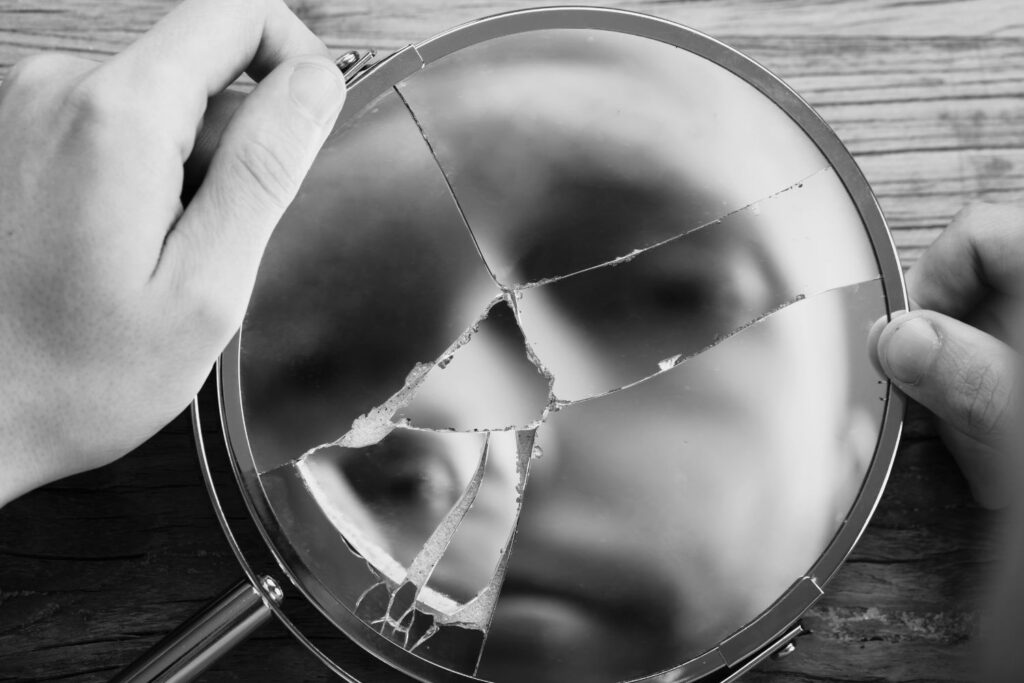
There is a moment, usually somewhere between the third self-help podcast and the second thread about “finding your purpose,” when you begin to suspect that the searching itself might be the problem.
Not the question. The velocity of the question.
You have been told that asking “who am I?” is a sign of depth. And maybe it is.
But there is a version of that question that functions less like an inquiry and more like a nervous habit, the way some people check their phone not because they expect a message but because the absence of checking has become unbearable.
The question becomes a substitute for the stillness that might actually answer it.
We live in a time of extraordinary naming.
Every interior state has been catalogued, hashtagged, and assigned a five-step protocol.
You feel unmoored for a Tuesday afternoon, and somewhere on the internet, someone is already calling it an identity crisis, suggesting journaling prompts, recommending a practitioner.
The naming arrives faster than the experience has time to settle.
And the problem with naming something too quickly is that you stop looking at it.
You think you understand it because you can describe it.
Jung had a concept he called the persona, the mask we assemble to meet the world, the role-shape that lets us function socially.
He was not saying the mask is a lie. He was saying it is not the whole truth.
The crisis is not when you realize you have been wearing a mask.
The crisis is when you can no longer tell where the mask ends, and you begin, and you go looking for an answer in the same environment that blurred the line in the first place.
You open Instagram. You watch someone explain their quarter-life pivot. You open YouTube.
Someone else has built a life around the exact thing you abandoned two years ago.
You open Spotify. There is a podcast about reinvention.
You close everything and open it again four minutes later. You are not looking for an answer.
You are avoiding the particular quality of silence that precedes one.
I recorded an album.
You can spend three days chasing a timbre that no one will perceive on the headphones they actually use.
One afternoon, the recording technician looked at me and said, quietly, “stop turning the lamp.”
I did not understand it immediately. Then I did.
In his imagination, “stop turning the lamp.” It’s what you do when a bulb is not quite seated, that small rotational nudge until the contact catches.
Except the bulb was already in. The light was already on. And I was still turning.
You adjust the light, and you adjust it, and you adjust it, and at some point, you are no longer trying to see better. You are just turning.
That’s what happens when you are among creative people…
The best is the enemy of the good, which is itself the enemy of the finished, which is itself the enemy of the started.
Sartre would say you are condemned to choose.
What he did not advertise loudly enough is that refusing to choose is also a choice, one that simply has the aesthetics of searching rather than the aesthetics of deciding.
This is not an argument for settling.
It is an observation about what happens when you outsource your interior life to an ecosystem that profits from your uncertainty.
The algorithm does not want you to find the answer. It wants you to stay with the question, scrolling.
Every guru, every framework, every neatly packaged identity archetype is, at some level, a lamp you can keep turning.
At some point the work is not to find more signal.
It is to sit with what you already received and let it mean something before you go looking for the next transmission.
The question I keep returning to is not “who am I?” It is something quieter and harder: what would you hear if you stopped asking?
The Last High
Most addiction books want to help you feel understood. This one wants you to feel responsible. The Last High isn't about substance abuse. It's about escape, and the uncomfortable reality that everyone is escaping something. Written from the inside, without sympathy asked or given.