

There is a type of person you’ve seen at every dinner, every party, every creative industry event, the one who needs you to know they’re an artist before they show you anything.
The announcement precedes the work, the identity is louder than the output.
You’ve seen them, you might have been one, briefly.
Now look around the internet.
The same phenomenon, scaled to millions.
Being creative has become a costume.
You wear it with the right lighting, the right caption, the right aesthetic disarray on your desk.
It’s a performance so widespread and so loud that we’ve started measuring creativity by visibility.
If you’re not posting it, did it even happen?
Here’s where it gets interesting.
The people who actually observe, who sit quietly and watch, who see what nobody asked them to see, who notice the thing underneath the thing, these people tend to be genuinely difficult to be around.
Not because they’re unpleasant, but because they’re paying a different kind of attention.
Goffman called everyday life a performance.
Every interaction is a stage, a role, a front region where we manage impressions.
Most people are unconscious actors, playing their part smoothly, never breaking character.
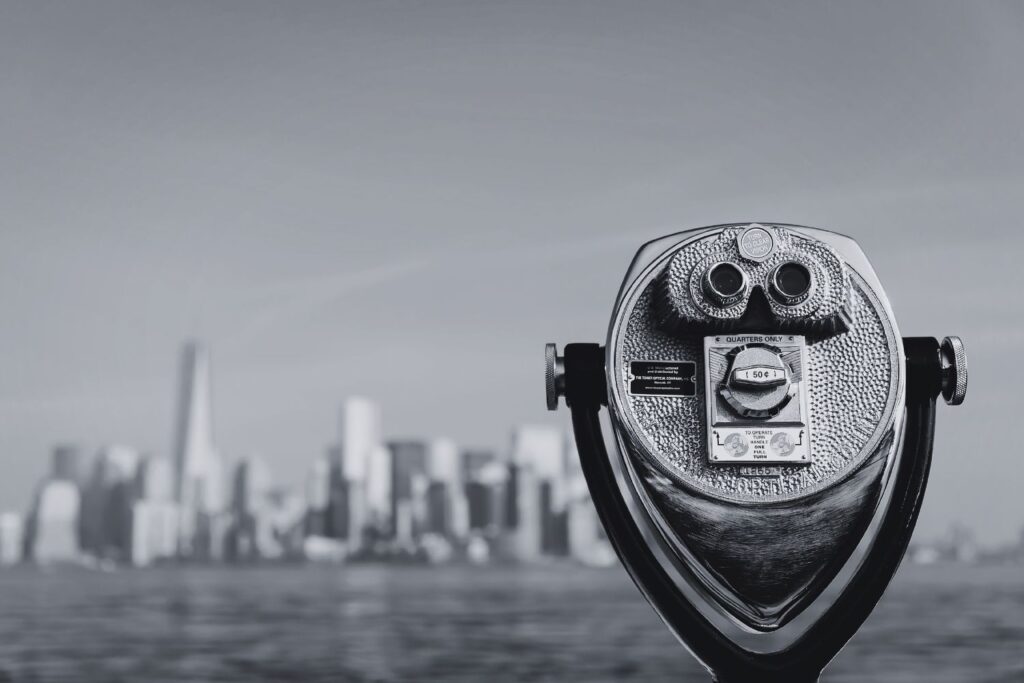
The actual observer, the one with a camera in their head, even when they’re not holding one, is watching the mechanics while everyone else is watching the scene.
It’s not the same experience as being in the room.
This is why the misunderstanding runs deeper than “people don’t get my work.”
It’s that the artist’s whole mode of being is slightly off-register.
He’s not networking at the party, he’s cataloguing it.
He’s not performing creativity, he’s extracting something from the moment that nobody authorized him to extract.
People feel it, even without naming it.
There’s a vague sense that they’re being watched, that something they said is being filed somewhere, that this person is not fully in agreement with everyone else silently signed.
Nobody likes that.
Everybody wants to tell their story without someone noticing the gaps.
Debord wrote about the spectacle as the social relationship between people mediated by images.
What he couldn’t have fully anticipated is a world where the spectacle is also participatory.
Now everyone is a producer.
Everyone has a brand.
Everyone is CEO.
The loudest voices get the algorithm’s attention, and the algorithm doesn’t care about the quality of the observation.
It cares about the frequency of the signal.
So the actual artist disappears into the noise, not because he’s failed to market himself, because marketing requires a certain willingness to simplify, to perform, to enter the agreement, and the observer has trouble entering agreements he doesn’t believe in.
This isn’t romantic.
It’s not suffering-as-identity, which is its own performance, just aestheticized.
It’s closer to a structural incompatibility.
The real creative person isn’t misunderstood because people are too dull to understand him.
He’s misunderstood because understanding him would require the audience to stop performing for a moment.
To be seen seeing, instead of being seen.
Most people aren’t willing to pay that price.
The irony is that the ones who perform creativity the loudest, the ones who need you to know, who wear it like a logo on a t-shirt, are doing something honest, in a way.
They want to belong to something.
That’s a real human need.
The observer doesn’t want to belong, he wants to look.
To the people in the room, that distinction is indistinguishable from indifference.
It isn’t indifference, but you can see why they’d think so.