

Somewhere in your early years, you figured out what worked.
What got you warmth, what got you ignored, what kept things calm.
You adjusted.
You performed small calculations without knowing you were doing it, and over time, those calculations hardened into something that felt like character.
Psychologists have a less flattering name for it.
What we call personality is often a set of protective patterns, responses to an environment that no longer exists.
The child who learned to disappear when things got loud grows into the adult who calls themselves introverted.
The one who kept the peace becomes the person everyone describes as easygoing.
These aren’t lies, exactly, they’re just formations that outlived their purpose.
Wilhelm Reich wrote about character as armor.
Winnicott distinguished between the true self and the false one, the self that responds genuinely and the self that adapts.
What’s interesting is how few people have ever asked which one shows up in the morning.
Most people haven’t needed to ask, the pattern runs well enough on its own.
Then came the feed.
Social media didn’t invent performing identity, but it gave the performance a scoreboard.
Now you can watch, in real time, which version of yourself gets more approval.
That’s useful data in the same way that a mirror angled to make you look taller is useful data, technically accurate, structurally misleading.
But something stranger is happening at the edges.
It’s not just that people perform for approval, which is old news, it’s that people are now borrowing entire personalities wholesale from strangers.
You see an influencer, someone with followers in the hundreds of thousands, and something in the human brain interprets that number as social proof of self.
If that many people want this person, then this person must be doing something right.
The conclusion, drawn quickly and rarely examined, is to become more like them.
Erich Fromm saw this decades before Instagram existed.
He wrote about the marketing character, a personality organized entirely around what sells rather than what is real.
The tragedy, he thought, was not that people were dishonest, It was that they no longer had enough access to themselves to know the difference.
Goffman had a colder read.
We are always performing, he argued.
The self is not behind the performance, it is the performance.
Front stage, back stage, audience, props, there is no unmasked face, only better and worse managed presentations.
This is either liberating or devastating, depending on how much you were hoping to find something underneath.
What social media has done is collapse the distinction between stages.
The front stage is now permanent.
The performance has no intermission, no green room, no moment where you sit in bad clothes and eat standing over the sink.
Without those gaps, the pattern becomes the whole thing, the mask and the face grow together until you can’t slip your fingers between them.
The people who seem most settled in themselves are usually not the ones with the most consistent public persona.
They’re the ones who have, at some point, noticed the pattern.
Noticed it and asked, with genuine curiosity rather than crisis, when did I decide this was me? Was it a decision at all? Or did I just stop checking?
That question doesn’t have an answer you can write in a caption, it barely has an answer at all.
Asking it is different from not asking it, in the same way that looking at armor is different from wearing it without knowing you have it on.
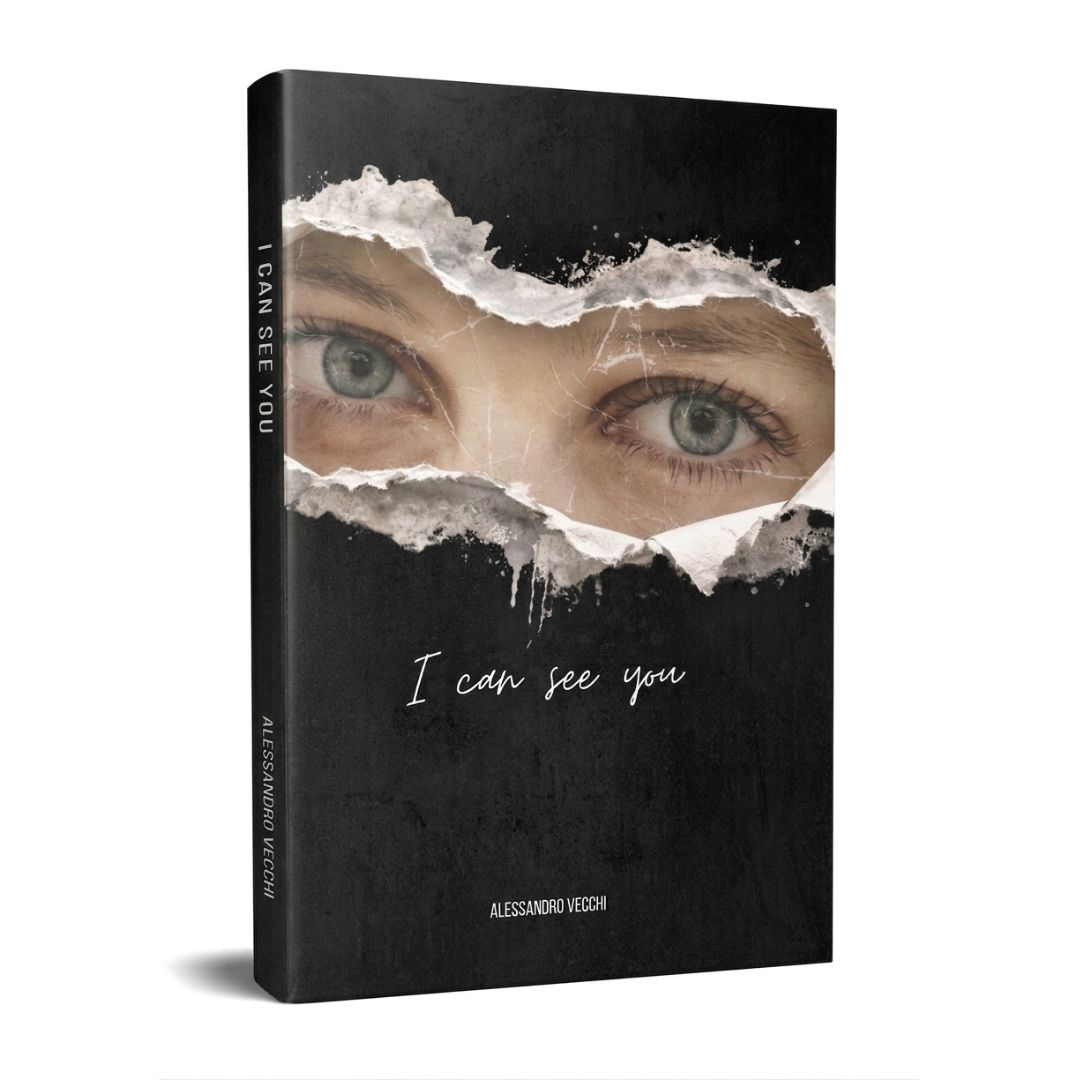
I Can See You