
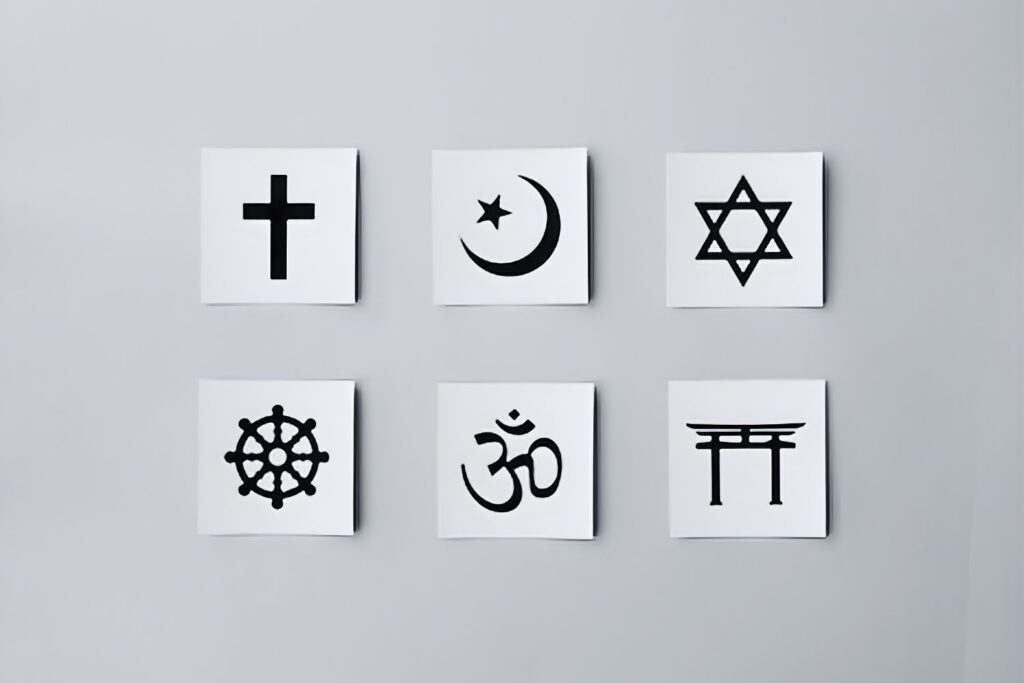
There is a difference between God and religion.
Most people never notice it.
They use the words interchangeably, which is roughly like confusing a river with the company that sells bottled water.
God, in whatever form you carry it, is the wordless thing.
It is the light on a Tuesday morning you didn’t expect.
The plate of food when you were genuinely hungry.
The warmth of a stranger who didn’t have to stop but did.
God, if you want to use the word seriously, is not a subscriber to any denomination.
The planet Earth is smaller than a grain of sand in the observable universe.
The idea that the force organizing all of that has a preferred Sunday address is the kind of thought you have when you’ve confused the map for the territory.
Religion is something else, religion is what happens when someone figures out that your fear is a market.
Go back far enough.
Humans lived close to the ground, close to the dark.
The sun rose and everything was possible.
The sun set and nothing was safe.
This is not metaphor, this is what the night was before electricity: genuinely, completely dark.
The darkness hid things.
Things in the dark could kill you, and then the sun came back, and relief flooded in like the tide.
Freud called religion a mass neurosis.
He was being a little uncharitable, but he wasn’t wrong about the mechanism.
Someone, at some point, looked at that cycle of terror and relief and understood it as power.
Name the darkness, name the light, build a story around both, collect the people who are frightened, you now have an institution.
Ernest Becker spent his life on this.
His argument, in the most useful summary: humans are the only animal that knows it is going to die.
Everything we build, every symbol we cling to, every system we invent is partly a project of managing that knowledge.
Religion is the most ancient of those projects.
It offers the most direct deal: follow these rules, perform these rituals, believe these things, and the thing you fear most loses some of its teeth.
You will continue, somewhere, in some form.
The deal is not nothing.
For most of human history, it was the only deal available.
The problem arrives when the people running the institution realize the deal is also profitable.
The capacity to draw borders.
The capacity to ask for money in the service of the infinite.
Watch where the money goes and you will know whether you are dealing with God or with a business that trademarked God’s name.
This is not an argument against faith.
Faith is the private thing, the one that does not require an intermediary or a building or a quarterly budget.
Faith is what you have at 3am when nothing else is available and you are still, somehow, not entirely alone.
Nobody can sell you that, which is precisely why they keep trying.
What they sell instead is its administrative cousin: the sensation of belonging to the correct group, of being in alignment with the correct deity, of being on the right side of a line that they drew.
This is not faith, this is the fear of being faithless, repackaged.
Durkheim, writing a century ago, was more measured: religion creates social cohesion.
People need to belong.
The rituals work even when the beliefs behind them don’t.
He was describing a function, not endorsing a fraud, but the function runs the same whether the institution behind it is genuine or extractive, and institutions, over time, tend toward self-preservation.
The belief becomes the vehicle, the institution becomes the point.
I have no quarrel with God.
I have a kind of tenderness toward the idea, actually.
Something that holds the whole thing together without needing credit for it.
Something that already knows you are not what you pretend to be on Sunday and doesn’t need you to pretend.
The quarrel is with the business model.
With the history of borders drawn in God’s name between people who wanted the same things.
With the wars that followed.
With the money that accumulated at the top of every pyramid built in someone else’s name.
If what you carry when you leave the building is a little quieter than the fear that sent you in, then maybe it served you.
But if you leave more certain than when you arrived that the person who disagrees with you is wrong, that is not God, that is a product.
And someone, somewhere, is getting rich on the margin.
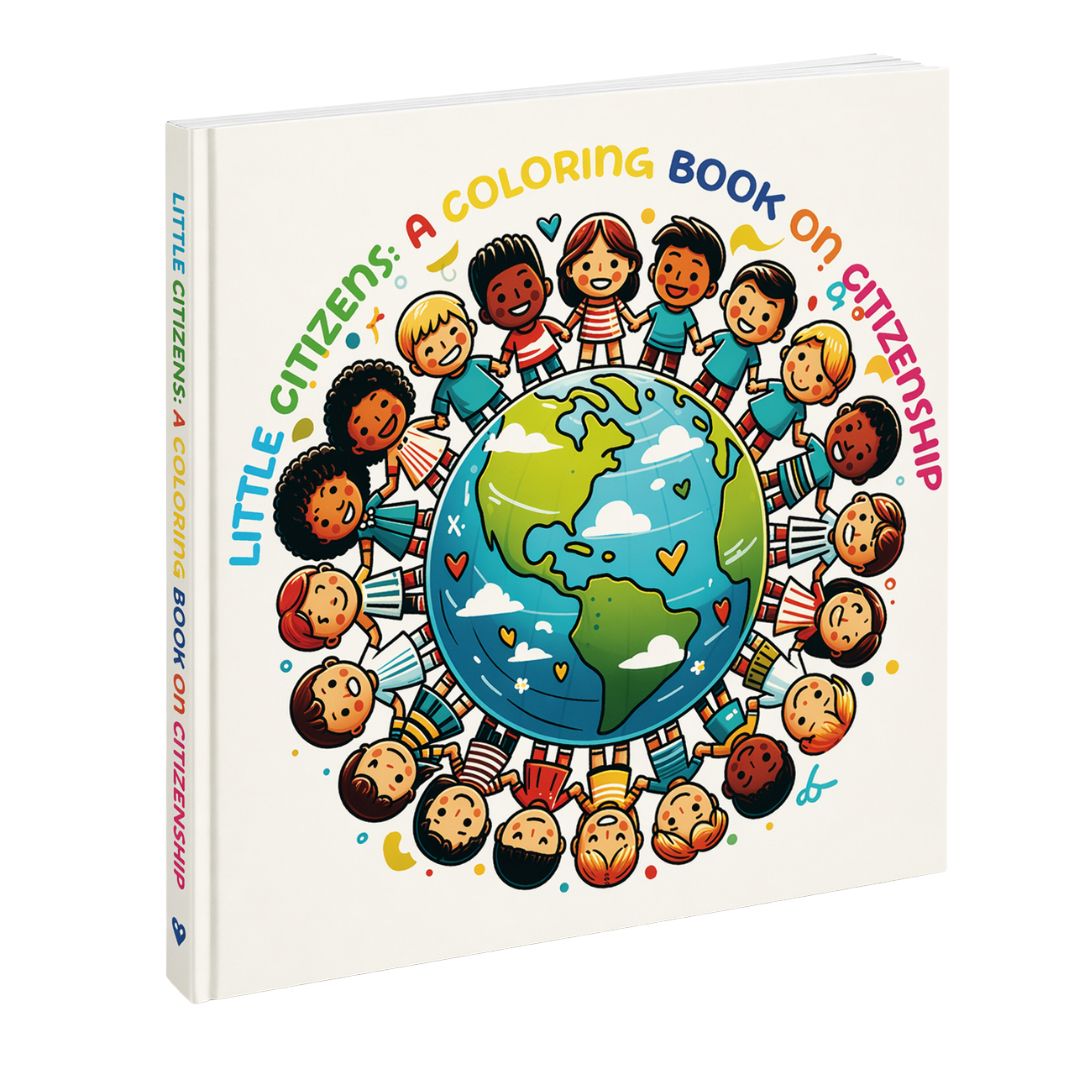
Little Citizens
Color by color, children aged 7–10 discover what it means to belong to something bigger than themselves. Little Citizens weaves civic values: respect, kindness, environmental awareness, and anti-bullying, into illustrated activities that feel like play and work like lessons. No lectures. No abstractions. Just a child, a page, and a question quietly embedded in every drawing: what kind of person do you want to be?