

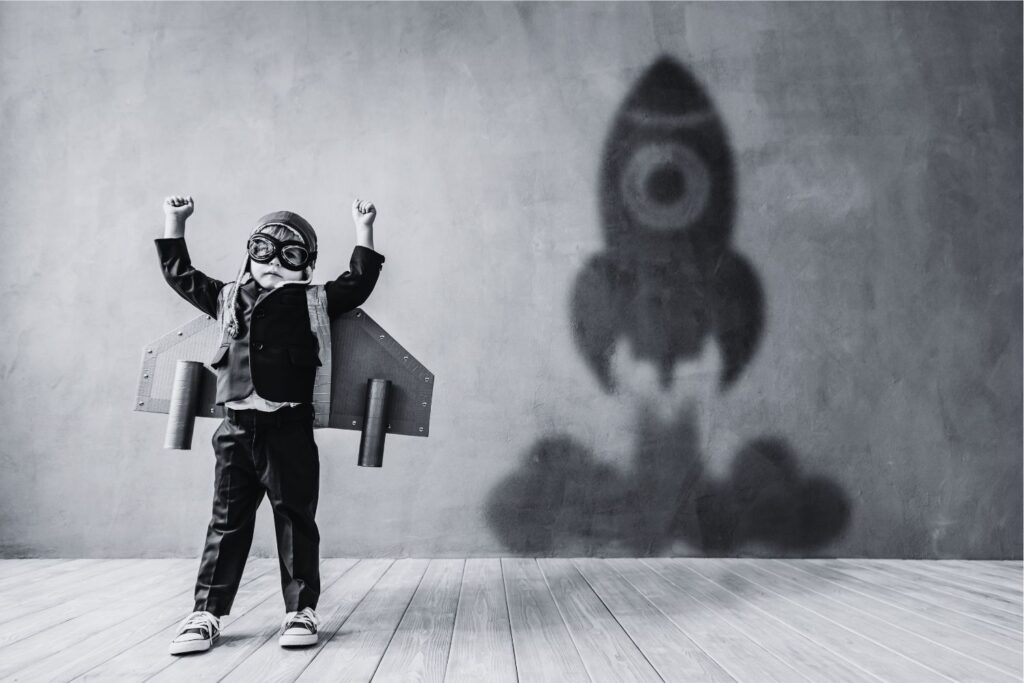
Everyone has punched the table at least once.
Maybe not literally, but you know the moment.
Something shifts, something clicks, and you hear yourself say this time with a conviction that feels almost physical.
The gym. The project. The language you were going to learn. The book you were going to finish writing.
That moment feels like arriving somewhere. It isn’t.
Motivation is a weather event.
It comes in, reorganizes everything, and leaves.
The problem is that while it’s there, it feels structural, not temporary.
You make decisions inside it as if it were permanent.
You sign up, you announce, you buy the shoes.
The shoes are always the tell.
They are bright and expensive, and they carry the full weight of a person you have not yet become.
Then it rains, or you sleep badly, or someone invites you somewhere, and you discover that the person who punched the table is not available right now.
He’s busy. He’s tired. He’ll be back.
William James wrote about habit in 1890, and the mechanics haven’t changed.
The nervous system is plastic, he said, meaning it can be shaped, but only by repetition.
Not by resolve. Not by intensity.
The feeling of certainty you have in a motivational moment has almost no predictive value for what you’ll do two weeks later on a Tuesday when nothing is at stake, and no one is watching.
The gym in January proves this every year with the punctuality of a ritual.
The equipment fills. The energy is real.
By March, the regulars have their machines back.
What interests me is not the failure itself but what it exposes.
There is a deeper discomfort underneath, and motivation is its displacement.
Instead of sitting with the discomfort of not yet being what you want to be, you produce energy.
The energy is genuine.
It just doesn’t belong to the work. It belongs to the idea of the work.
Discipline is something else entirely.
It does not ask how you feel about it today.
It has already answered that question, weeks ago, and the answer was irrelevant.
This is not severity, it’s actually a form of relief.
Once you stop negotiating with yourself every morning, once the action becomes as automatic as brushing your teeth, the emotional cost of doing it drops to almost nothing.
James called this the great flywheel of society.
Dostoevsky called the man who refused to become a machine the underground man, and that character is not a hero, whatever he believes.
He is someone who confused resistance with depth.
Twenty-one days is the number most people cite.
The actual research is messier, closer to 66 on average, and highly variable depending on complexity.
But the shape is the same: early repetitions are expensive, later ones are cheap, and at some point the absence of the habit feels stranger than the habit itself.
You don’t need the shoes anymore.
You need the absence of the shoes to make you uncomfortable.
There is no motivational video that replaces the seventh Tuesday.
There is no quote, no playlist, no morning routine content, no reminder of how close you are.
The seventh Tuesday is where the thing either exists, or it doesn’t.
If you stop there, you’ll be back in January, buying new shoes, making the same announcement to no one in particular, feeling, briefly, like you’ve already arrived.
You haven’t. But you could.
Whether you come back on the eighth Tuesday is the only question that matters.
The Last High
Most addiction books want to help you feel understood. This one wants you to feel responsible. The Last High isn't about substance abuse. It's about escape, and the uncomfortable reality that everyone is escaping something. Written from the inside, without sympathy asked or given.