
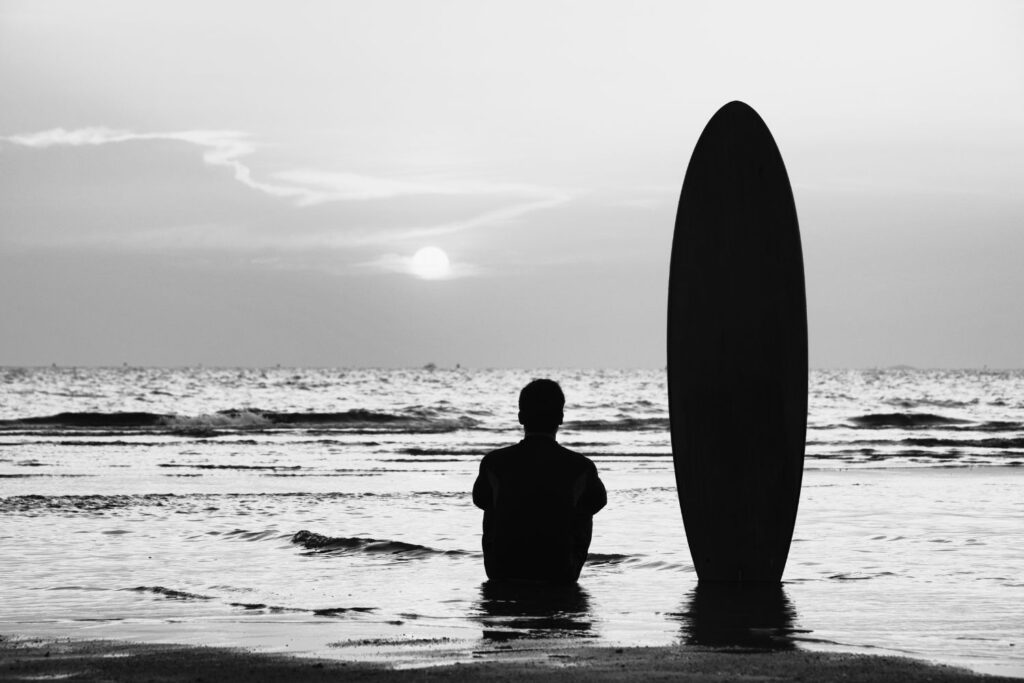
A surfer doesn’t fight the ocean.
Not because he lacks the strength, but because he understands something the ocean never forgot: it was here before him, and it will be here after.
You read that and you think, yes, acceptance.
You think, flow.
You think of Marcus Aurelius and Lao Tzu and you feel, briefly, a kind of permission to stop fighting what you cannot change.
That permission is real, and it is also being used against you.
Stoicism, Taoism, the quieter corners of Buddhist thought, they share something essential.
Not passivity, something more precise than that.
They say: observe the current, read the water, and move with what is actually there rather than what you wished was there.
The surfer with arms of steel who tries to paddle through a rip current doesn’t win, he drowns with good posture.
Accepting direction is not the same as accepting defeat, it is the precondition for surviving long enough to try again.
This is the beautiful part, it is also the part that has been extracted, cleaned, packaged, and sold back to you as a subscription.
Because there is a second current.
One that is not natural, not inevitable, not the sea.
One that was engineered, and the philosophy that teaches you to accept what you cannot change has been very quietly applied to things you are not supposed to notice you could change.
Pascal wrote that all of humanity’s problems stem from the inability to sit quietly in a room.
He meant it as a diagnosis, someone else read it as a design brief.
Not because running is your nature, but because a person who is running does not look up.
Inflation is not an accident of economic cycles.
The $13 billion of the Marshall Plan, which rebuilt the physical and institutional infrastructure of an entire shattered continent in 1948, would not today purchase a serious military contract.
Not a continent, a contract.
The distance between those two sentences is not “economics,” it is not even finance.
It is a slow, structural, multi-generational redistribution of attention, yours, toward the problem of survival and away from the problem of observation.
Simone Weil wrote that attention is the rarest and purest form of generosity.
She meant it spiritually, but it applies with brutal precision to the political economy of the last eighty years.
Every percentage point of real purchasing power that quietly evaporates from your savings is a percentage point of attention redirected from the question of why, toward the question of how.
How do I keep up? How do I cover this? How do I not fall behind?
Debord called it the spectacle.
Not the circus, not the noise, not the distraction, the total organization of life around appearances that serve the system that produces them.
You do not watch the spectacle.
You live inside it, and inside it, the stoic advice to accept what you cannot change merges seamlessly with the instruction to accept what you have not yet understood.
The surfer metaphor holds, but you need to know which sea you’re in.
There is the sea that was here before you and will be here after.
Read it, respect it, move with it.
And there is the sea that was built, the one with the invisible current, the one that runs exactly counter to where you were trying to go, and has done so your entire life.
The question Stoicism does not always ask is: who made this water?
Acceptance without that question is not philosophy, it is sedation.
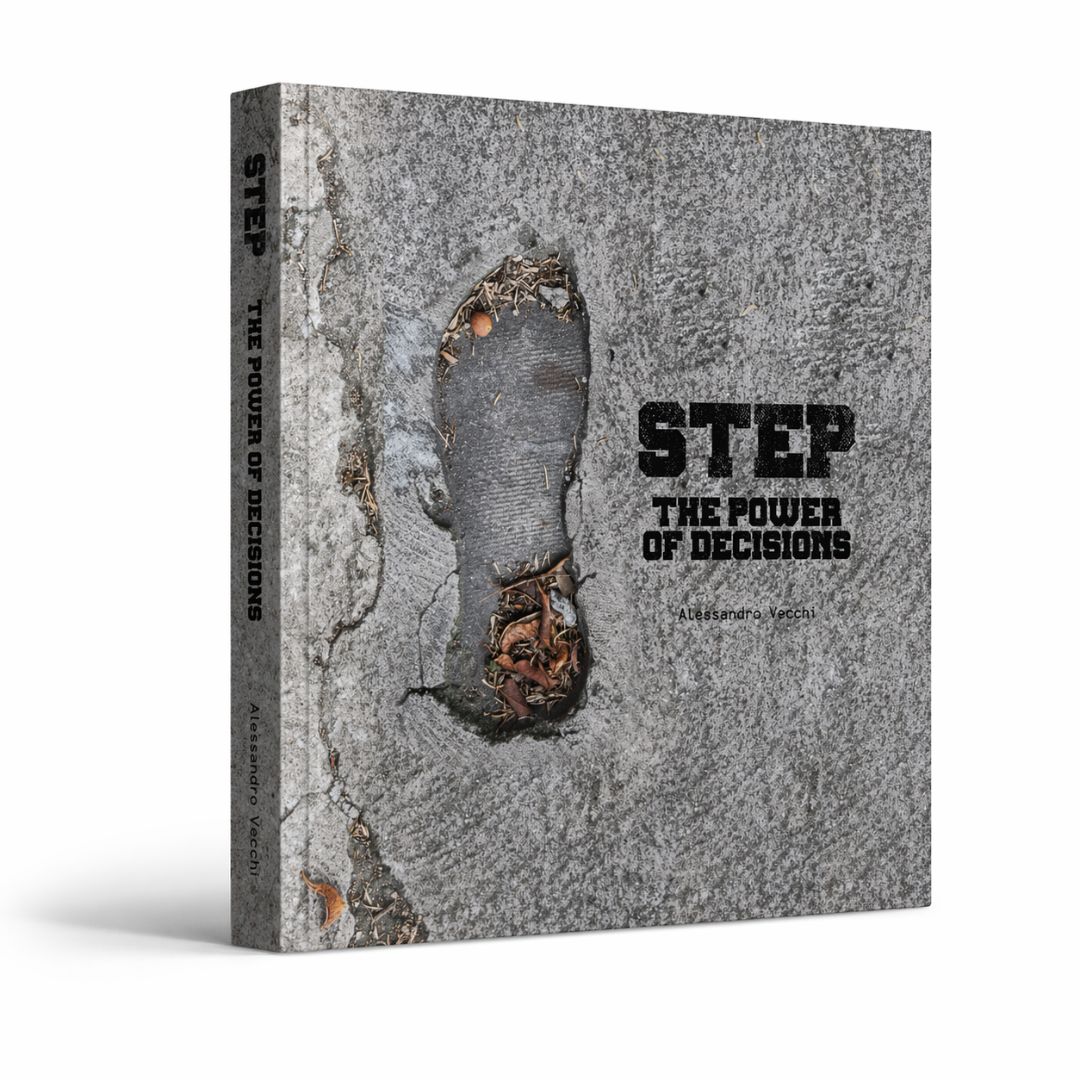
Every life is the sum of its steps. Not the grand ones, the quiet, daily ones we barely notice making. STEP is a visual and narrative journey through the architecture of personal choice. How decisions accumulate, how resilience isn't a gift but a response, and how self-discovery doesn't arrive announced, it shows up in the rearview mirror.
Through a blend of photography and reflection, this book offers a mirror. For those willing to look at the choices that brought them here, and the ones still ahead.