
There’s a version of this topic that belongs on a crystal shelf between a diffuser and a book with a sunrise on the cover.
That’s not this.
The shadow self, in that version, is something you encounter on a guided meditation or in a retreat where everyone cries by day three.
Something you integrate, something you heal.
The language is soft because the confrontation is soft.
You come out feeling witnessed. Nothing changes.
The version I’ve been living in is less comfortable.
It doesn’t require a therapist or a philosophy.
It requires looking at the exact thing you’ve been carefully not looking at, and deciding what to do with it.
You already know what it is.
That’s the part nobody says out loud.
You’re not hiding from something unknown.
You’re hiding from something inconvenient.
There’s a concept in Sartre that cuts here, bad faith.
The waiter who performs being a waiter so completely that he stops noticing he could walk out.
The person who plays their role so well, for so long, that the role becomes the excuse.
I didn’t write the book because I’m not really a writer.
I didn’t build the business because the market is too crowded.
I haven’t changed because this is just how I am.
Sartre called this a choice, not a condition, a daily, renewable choice to pretend you don’t have one.
The shadow, in this reading, is not the dark part of your personality.
It’s the pile of decisions you keep postponing by giving them better names.
Not laziness, but exhaustion.
Not fear, but realism.
Not avoidance, but strategy.
The shadow is where your excuses live, and you built that place, room by room.
You know the layout.
Humility enters here, and not in the way people usually mean it, not as modesty, not as self-deprecation.
Humility as the specific act of listening to an idea that contradicts what you’ve already decided.
Sitting in a room where someone says something you think is wrong, and staying with it long enough to find out if you’re the wrong one.
Most people can’t do it.
The defense mechanisms activate faster than the thinking does.
The brainstorm where everyone can say anything, including the stupid things, only works if no one needs to be right.
That’s a harder condition than it sounds.
It requires people who are competent enough to not need the approval, and honest enough to not perform the competence.
Turning on all the lights doesn’t mean you eliminate the shadow.
It means you stop using the darkness as a feature.
You know what you need to stop eating.
You know what you need to start writing.
You know which call you haven’t made and why you haven’t made it.
This isn’t motivational.
Motivation implies you need energy you don’t have.
You have the energy.
You’ve been spending it on the maintenance of the avoidance.
The movie metaphor is too easy, so I’ll use it precisely: you already know how this character ends if they keep making the same choice at every act break.
You’ve seen that film, it’s not a tragedy, it’s just a story that runs out of time.
The question isn’t whether you’ll face it.
The shadow doesn’t wait for permission.
It shows up in who irritates you, what you avoid, and how you talk about what you want.
It’s already in the room.
The question is what you do when you stop pretending it isn’t.
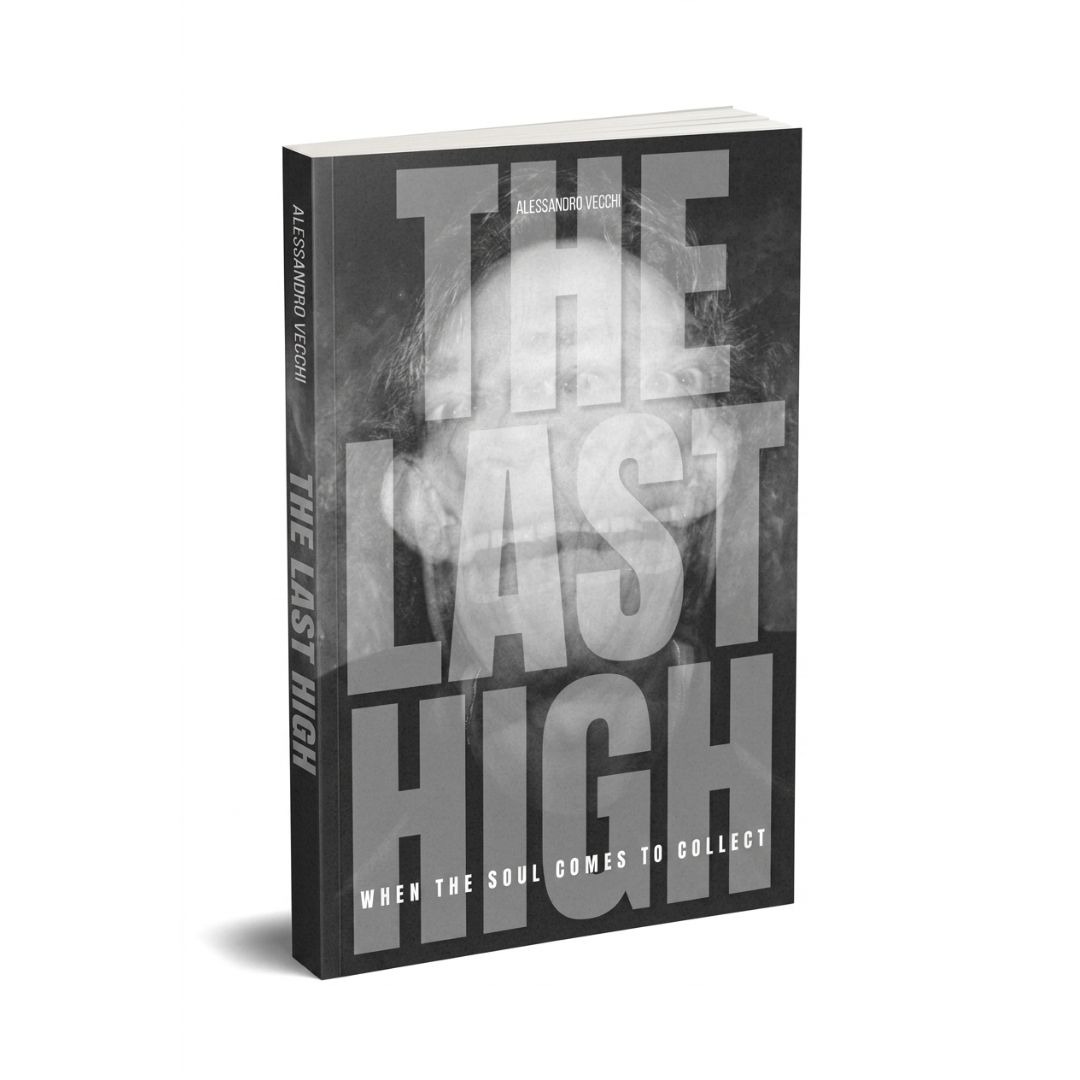
The Last High
Most addiction books want to help you feel understood. This one wants you to feel responsible. The Last High isn't about substance abuse. It's about escape, and the uncomfortable reality that everyone is escaping something. Written from the inside, without sympathy asked or given.