

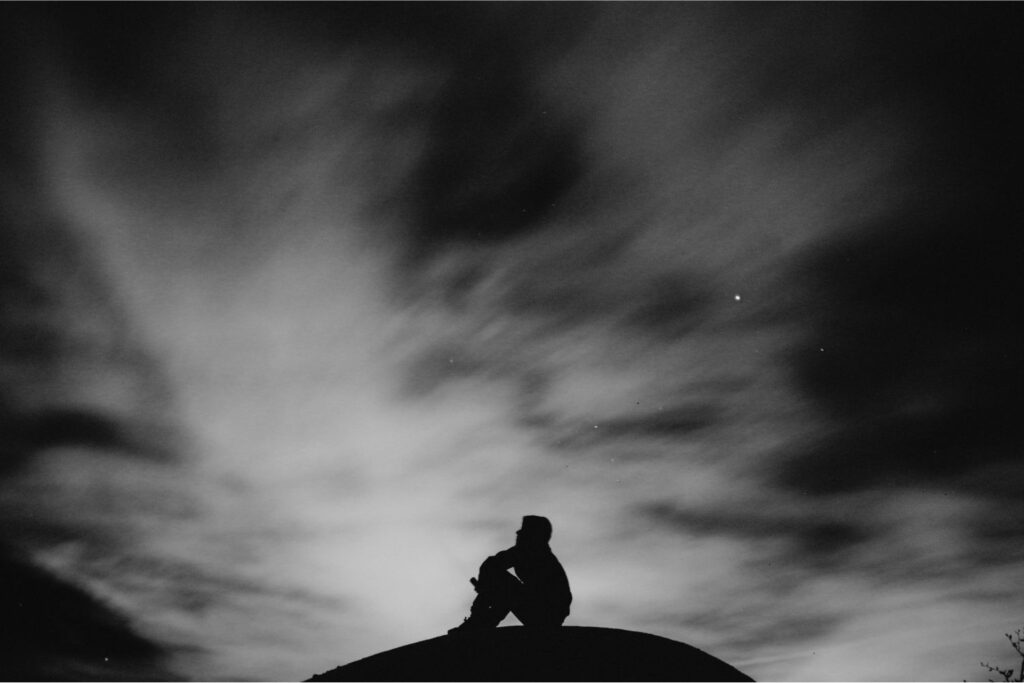
The mind is a bad archivist, it keeps pulling the same folder and calling it memory, when what it has actually saved is a mood board.
You think about something you no longer have, you think about it with a regularity that embarrasses you, especially given that you know, you actually know, it was not good.
The facts are there, you can list them, and yet the thoughts return.
The specific weight of a particular evening returns, the texture of a time returns, you ask yourself what this says about you.
It says less than you think, and something more interesting than you expect.
What the mind is not doing, when it loops back, is missing the thing itself.
It’s circling a state of being that existed during that time, not because of it, alongside it.
The distinction is architectural.
A version of yourself that operated inside a structure, logistical, emotional, social, that made certain feelings available.
The situation may have been failing, the conditions may have been inadequate, but the state was real, and it served a function, and that function is now absent.
This is not nostalgia in the sentimental sense, it’s closer to what happens when your usual route home is closed, and your body keeps trying to turn the same corner.
The road is gone, the body has not updated yet.
Proust understood something about this that most people who haven’t read him would still recognize in themselves: what involuntary memory captures is not events but atmospheres.
Not what happened but the particular quality of light in which it happened, the temperature, the specific absence of a certain kind of dread.
The mind does not retrieve the past, it retrieves a texture of time, and that texture, whatever it was made of, was something the present has not yet reproduced.
The problem is that we are better at naming objects than atmospheres, so we say: I can’t stop thinking about that place. That period. That person. That version of my life.
And in doing so, we assign the feeling an address it does not actually have.
We go looking in the wrong place for the thing we lost, and we find only the wrong thing, which confirms what we feared, that we are irrational, that we are weak, that we cannot get over it.
You are not unable to get over a thing, you are unable to reconstruct a condition of being, and you have not found another path to it yet.
There is a judgment embedded in the original complaint that does not belong there.
The self-reproach, why can’t I stop, assumes the target of the thought is accurate, it assumes you are missing what you think you are missing.
But the mind, left to its own archiving, will point at the most recognizable object in the frame rather than the formless thing it actually lost. It names.
Naming is easier than sitting with the unnamed.
Sartre wrote about bad faith as the act of pretending your choices are not choices, playing a role so completely that you forget you put the costume on.
Something similar happens here.
The past becomes the actor we blame for the feeling.
The feeling remains unexamined behind it.
The real question is not how to stop thinking about what came before.
The real question is what was structurally available then that has not been reconstructed now.
Not happiness, necessarily, not even connection, necessarily.
Something more modest and more fundamental: a daily life that had a shape you did not have to build entirely alone, a self that existed inside a context rather than outside of one.
Some people tolerate that construction project without blinking, others find it quietly unbearable without ever naming it as what they find unbearable, so they name a face, a city, a chapter instead.
The label is more specific, the grief, attached to something nameable, becomes almost manageable.
What the mind is protecting you from, when it loops, is the wider question.
Not: why can’t I stop thinking about the past.
But: what exactly am I not yet able to give myself?
The Last High
Most addiction books want to help you feel understood. This one wants you to feel responsible. The Last High isn't about substance abuse. It's about escape, and the uncomfortable reality that everyone is escaping something. Written from the inside, without sympathy asked or given.