

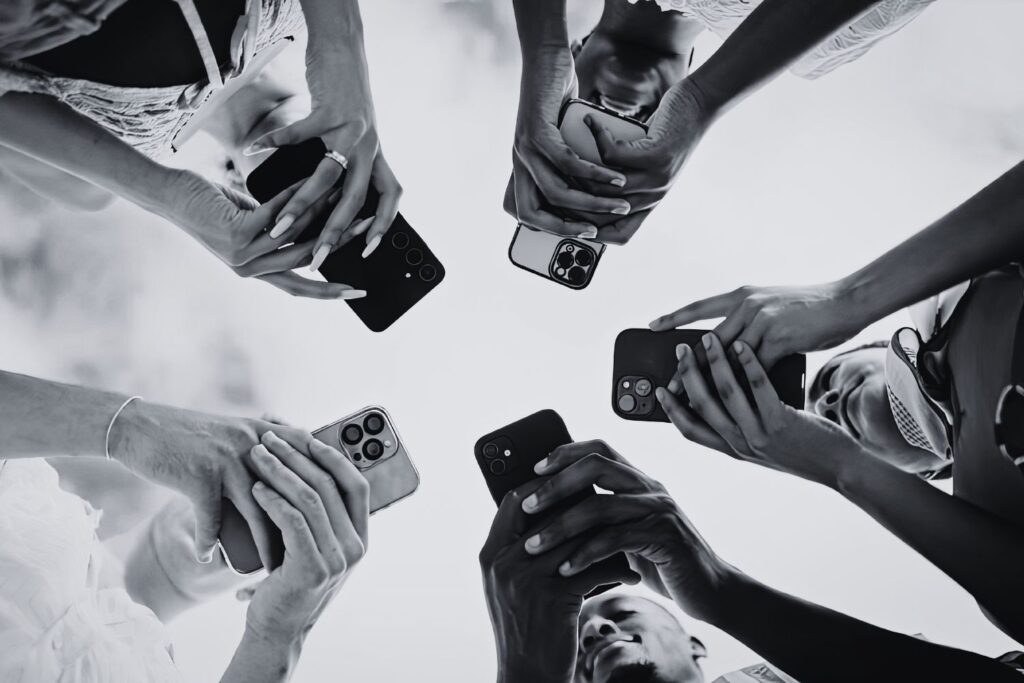
You open your phone for thirty seconds.
Two hours later, you surface disoriented, thumbs sore, unsure of what you’ve even seen.
This isn’t a character flaw, yu’re not weak-willed or undisciplined.
Something is actually working against you.
Social media doesn’t make money by giving you what you want.
It makes money by keeping you there, by occupying your attention for as long as possible, and the people building these platforms are very, very good at their job.
They’ve studied how your brain works.
They know that unpredictable notifications create anticipation, the same mechanism that makes slot machines addictive.
They’ve engineered the scroll to feel infinite, to eliminate the natural stopping point that would come from reaching the end of a feed.
They’ve designed the algorithm to show you what will provoke the strongest reaction, not what will leave you feeling good.
Every swipe, every pause, every moment you stay is data.
Every moment is revenue.
You’re not the customer, you’re the product being sold to the companies paying for advertising space.
Here’s what bothers me about this: time is the only thing in your life that doesn’t come back.
Not money, you can earn more of that.
Not opportunities, sometimes new ones appear.
But time? Once it’s gone, it’s gone.
And yet we spend it like we’re convinced it’s infinite.
Think about your last week.
How many hours did you spend on social media?
Now imagine those hours were paid work.
Imagine someone asked you to perform a job: scrolling, clicking, engaging for free, enriching someone else, while you got nothing.
You’d say no immediately.
But you’re saying yes every single day.
You’re just not aware you’re being asked.
The worst part isn’t the time itself, it’s what that time costs you.
The moment you didn’t start that project.
The hour you didn’t spend with someone you care about.
The afternoon you didn’t feel the sun.
The evening you didn’t move your body, didn’t read, didn’t sit with your own thoughts.
You were somewhere else, living no one’s life but pretending to live everyone’s.
Willpower is not a sustainable strategy against engineering that sophisticated, but that’s also not why you’re here.
You’re here because some part of you knows something is off.
You can feel the time disappearing, you can sense the gap between the life you’re living and the life you’re actually present for.
That feeling is honest, trust it.
You don’t need to delete social media.
You don’t need to become a monk or pretend the digital world doesn’t exist, but you do need to stop being unconscious about it.
Start by noticing.
Before you pick up your phone, pause and ask yourself: am I doing this because I want to, or because I’m feeling something I’m trying to escape?
Then set a real boundary, not a vague intention, an actual rule.
“No phone before coffee.”
“No scrolling in bed.”
“Social media only between 6 and 6:30 p.m.”
Something specific enough that you can actually keep it.
Most importantly, do something else.
Fill the space with something that feels like it’s actually yours.
Movement, reading, conversation, or walking outside.
The thing you’ve been meaning to do but keep postponing because you’re too tired, actually, you’re tired because you’re spending your energy somewhere that doesn’t nourish you.
Here’s something they don’t tell you about screen time: it disconnects you from your own body.
You spend six, eight, ten hours a day staring at a lit rectangle, unmoving.
Your hands are occupied, your eyes are fixed, your breath becomes shallow.
You forget, literally forget, that you exist as a physical being in a physical space.
You become a mind without a body, a consciousness without a home.
This matters more than you think.
Your body isn’t separate from your mind, it’s not a vessel you’re piloting.
You are your body, and when you spend all your time in a virtual space, you’re essentially abandoning yourself.
The antidote isn’t complicated: you have to remember you have a body.
Feel your feet on the ground, move, touch something, stand in the sun, breathe air that hasn’t been filtered through a screen.
These aren’t wellness tips, they’re remembrances, invitations to come back to yourself.
I’m not telling you anything you don’t already know.
You know you spend too much time online.
You know it’s not serving you.
You know that the moments that matter: the real conversations, the genuine rest, the sense of being alive, they happen when you’re not looking at a screen.
The question isn’t whether you understand the problem, the question is whether you’re ready to do something about it.
Start small.
One day without the app, one hour before bed without your phone, one afternoon where you do something that requires your full attention.
Notice what happens, notice how your mind settles, notice what you remember about being alive.
You’ve given enough of your time away.
The rest is yours.
I Can See You