
The wellness internet has an explanation for this.
It involves breathing, slowing down, and being present.
It involves a phone in a flower field, it’s wrong.
I put my headphones on before I leave the building.
Not to listen to something specific, to close a door.
The city is still there.
I can see it, I can feel the humidity, I can read the geometry of the street from fifty meters, but the sound is gone.
What remains is a kind of parallel universe, one that runs on the same geography as the real one but has different rules.
In this one, I am watching and everything else is moving.
I don’t go out looking for photographs.
That’s the first thing you have to understand.
There’s no subject, there’s no theme, there’s not even, in any honest sense, a plan.
I scan far before I scan close.
My eyes are almost always at distance, reading what’s coming, positioning myself for something I can’t yet name.
Sometimes I move laterally without thinking about it, the way you shift weight before the other person finishes speaking.
Sometimes I hold still.
This is where Merleau-Ponty is useful, though he never held a camera.
He argued that the body doesn’t receive information and then act, it acts and receives simultaneously.
The hand that reaches for the glass already knows its weight.
The photographer who pivots at exactly the wrong moment wasn’t late, they were already in a different conversation with the scene.
You don’t decide to photograph something, you find yourself photographing it.
The photograph doesn’t come from pressing the button, it comes from the moment, sometimes seconds earlier, sometimes minutes, when you allow yourself to be part of the ecosystem rather than observing it from outside.
The frame happens when you stop being separate from what you’re watching.
I never look at the photographs I’ve taken while I’m out.
This sounds like discipline, it isn’t, it’s closer to superstition.
The moment you open the viewfinder to review, you begin editing while still inside the work.
The mind starts measuring, it starts comparing.
The parallel universe collapses, and you’re back in the city with a camera, which is a completely different thing.
When I get home, I download everything immediately.
Then I shower.
By the time I sit down at the screen, something has shifted.
The distance is right, I’m clean, the day is behind me, and whatever the camera held during those hours is about to reveal itself as if someone else took the pictures.
Sometimes that person brought back something real.
Sometimes they brought back nothing, hours of exposure that never found a single eloquent frame.
That happens more than most photographers admit.
Csikszentmihalyi called the state I’m describing flow.
Complete absorption in a task, the dissolution of self-consciousness, time behaving differently.
He was right about the phenomenology and wrong about the framing.
Flow implies a productive state.
What street photography is closer to is an act of faith.
You go out with no guarantee.
You give the afternoon over to something that may return nothing.
The practice is not the photograph, the practice is the willingness to go out anyway, move through the city as if what you’re about to see matters, and come home with whatever was given.
Some days, something is given, some days nothing is.
Both are the same practice.
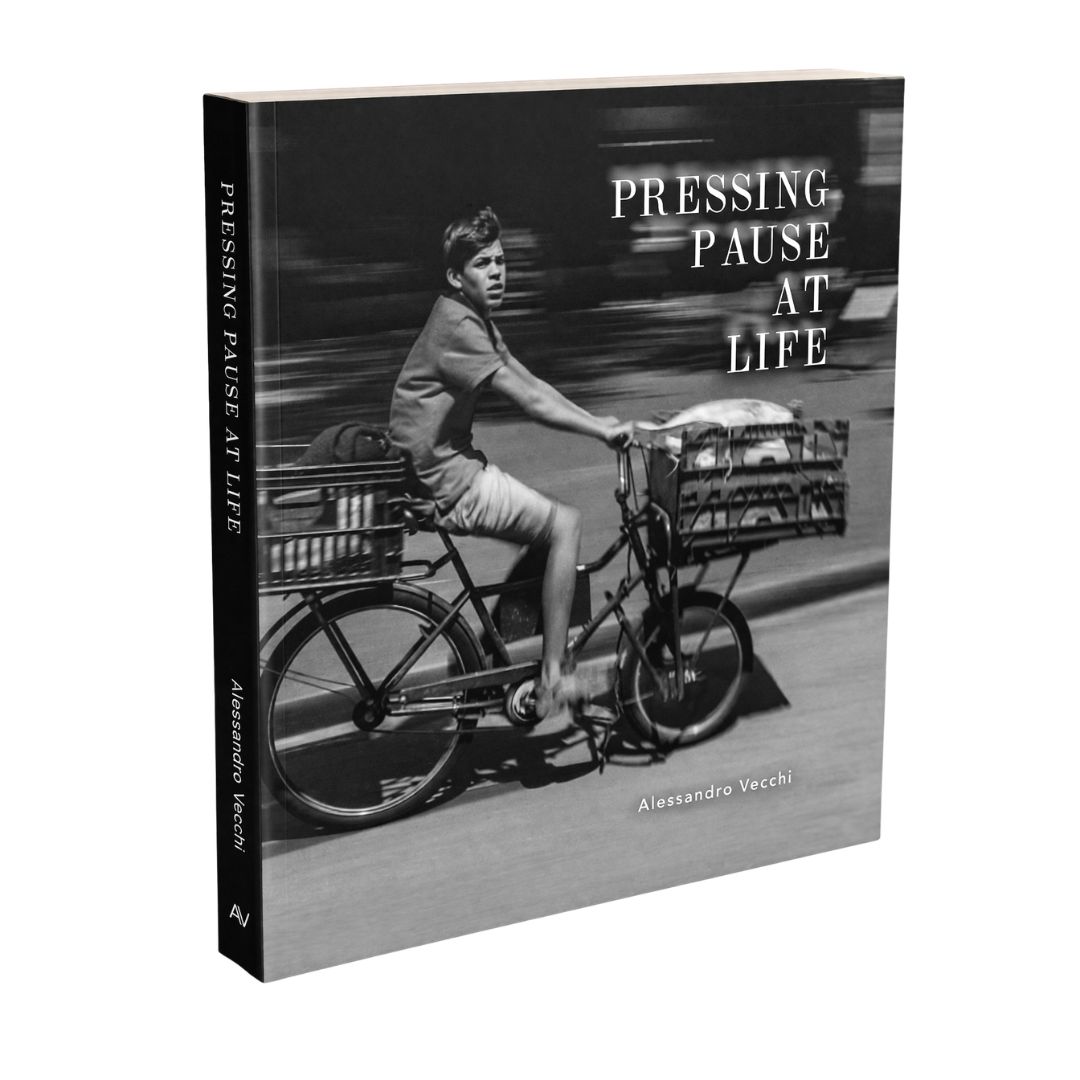
Pressing Pause at Life
240 pages of street photography paired with philosophical reflection. An invitation to notice what you've trained yourself to ignore: light on walls, silence between strangers, the weight of ordinary moments. The city was always saying something. This book teaches you to listen.