
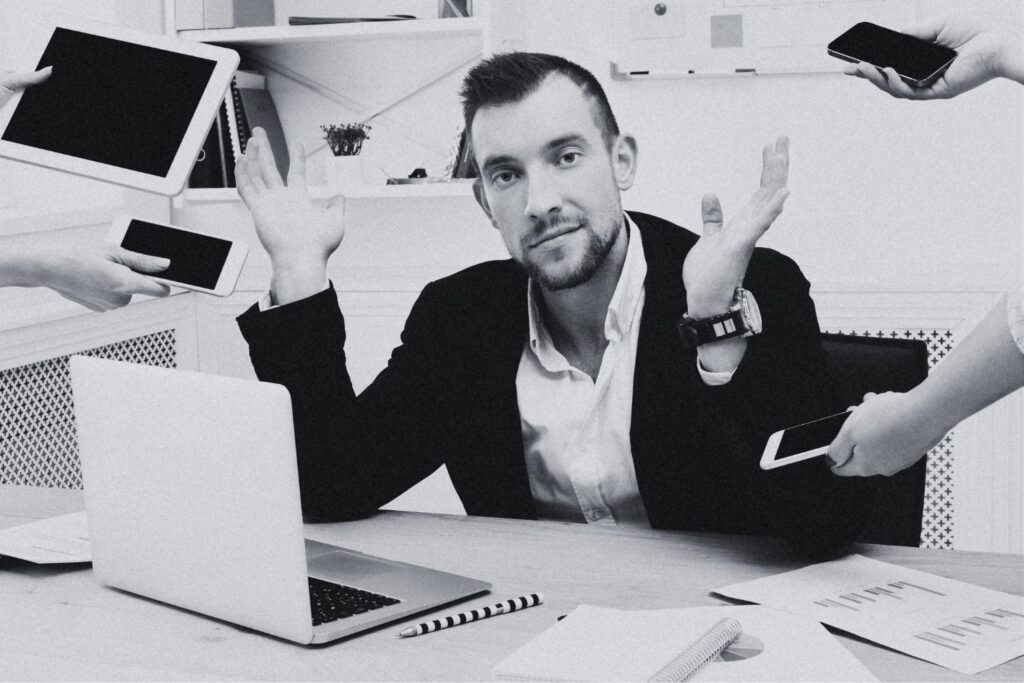
The guilt arrives first as a small contraction in the chest, right around eleven at night, when the phone lights up with nothing urgent.
You open the email anyway.
Not because the reply cannot wait until morning, but because the mask you wear, the one that signals you are the sort of person who never truly clocks off, needs to be seen doing its job.
The screen glows.
You type a few polished sentences.
The mask smiles back at you, satisfied for another cycle.
We do not just work anymore, we perform the act of working.
The difference sits in the small, observable details.
The timestamp on the Slack message sent after dinner, the LinkedIn post about “crushing it” that frames yesterday’s ordinary tasks as heroic output, the way you arrange your calendar so gaps look like deliberate strategy rather than empty space.
The performance is not for the client or the boss, it is for the mirror that has learned to measure your existence in deliverables.
What is Internalized Capitalism?
You start to treat your own attention like a factory floor, idle time becomes waste.
The part of you that wants to sit on a bench and watch traffic, or stare at a wall until the thoughts thin out, gets labeled inefficient and quietly disciplined.
Rest is no longer recovery, it is a cost center that must justify its existence with future productivity gains.
You internalize the logic so thoroughly that guilt arrives automatically when output slows.
Your soul begins to keep books.
Every hour not producing feels like a small theft from some invisible shareholder who happens to live inside your skull.
You become the manager of your own exploitation, clocking in and out of yourself with the same grim efficiency the system once demanded from the outside.
The factory never closes because you are both owner and machine.
The raw material is your time, your focus, your capacity to appear busy even when nothing substantial moves.
The product is the visible evidence that you are still valuable.
When production dips, the anxiety that follows is not abstract philosophy, it is the concrete feeling that you are disappearing.
Jung described the persona as the mask we craft to meet the expectations of the world.
In the old corporate boardrooms, it was simpler: suit, tie, measured enthusiasm.
Today the mask has gone digital and constant.
It smiles on video calls, curates its feed, and signals availability at all hours.
On LinkedIn it performs thought leadership with carefully cropped images of notebooks and coffee.
In group chats, it reacts with the right emoji at the right speed.
The persona no longer comes off at the door, it lives in your pocket and whispers that any moment not spent optimizing is a moment the mask might slip, revealing the ordinary, sometimes inert human underneath.
You notice how easily the role swallows the actor.
The productivity persona does not merely hide parts of you, it begins to dictate what feels real.
It wants to do nothing profitable.
It wants to wander without purpose, to let an afternoon dissolve without documentation.
That shadow threatens the entire operation because it refuses to generate measurable value.
So you keep it quiet with another email, another list, another visible effort that proves the mask is still firmly in place.
The performance is not cynical.
Most days it feels necessary, even virtuous.
You watch colleagues do the same and recognize the choreography.
Everyone is busy performing busyness.
The frame we compose around our days becomes a carefully subtracted scene where only motion and output remain visible.
The quiet intervals, the staring, the small rebellions of doing less, get cropped out before anyone else can see them.
You begin to experiment with subtraction, the way a photographer steps back from the obvious subject and lets the negative space speak.
You leave the phone in another room for an hour and notice how the mind first panics, then settles.
You resist the urge to document the resistance.
The guilt surfaces, familiar and precise, but you observe it the way you would observe a stranger crossing the street, curious, not corrective.
The factory logic protests, the persona tightens.
Yet, something in the silence refuses to negotiate.
The cost of permanent availability is not only fatigue, it is the gradual erosion of the capacity to hear anything that does not arrive as a notification or a metric.
When every gap is filled with input or output, the quieter registers of your own thinking become inaudible.
You lose the frame that would let you see your life without the overlay of performance.
In the street, you sometimes watch people moving between obligations.
Their faces carry the same low-level tension you recognize in your own reflection after too many late replies.
The body has learned to stay slightly braced, ready for the next demand.
The eyes scan for the next opportunity to prove usefulness.
It is a collective posture now, almost elegant in its uniformity.
You wonder what remains when the performance is no longer required.
Not a dramatic unmasking, not a sudden freedom, but a simpler question of attention: what do you notice when you stop framing every moment as potential content for the productivity show?
The shadow is still there, patient in its unprofitability.
It has no agenda except to exist without justification.
You keep walking, camera in hand or not, and let the question trail behind you like an unexposed frame.
How does the mask sit on your face tonight, and what would the photograph look like if you finally stepped out of the shot?
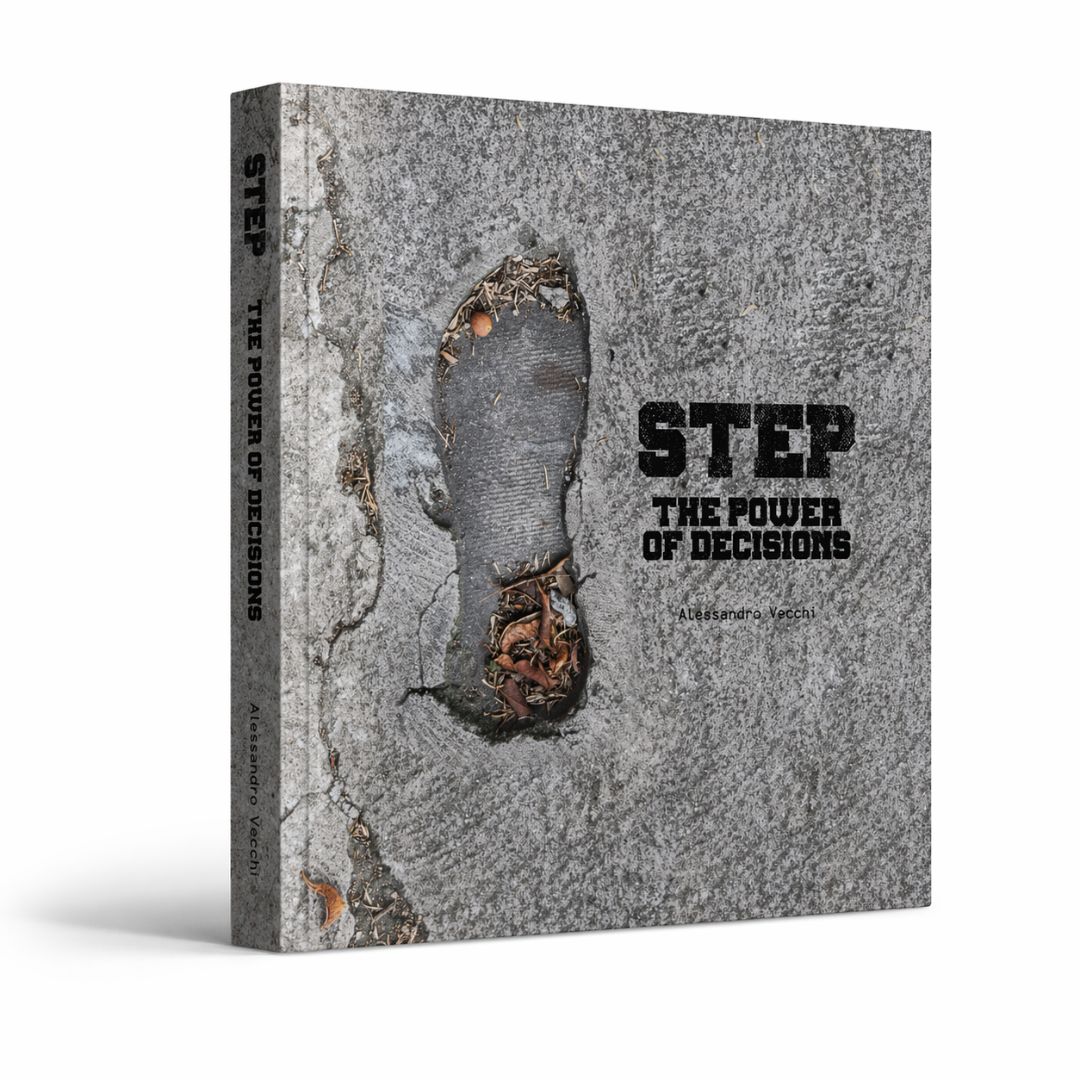
Every life is the sum of its steps. Not the grand ones, the quiet, daily ones we barely notice making. STEP is a visual and narrative journey through the architecture of personal choice. How decisions accumulate, how resilience isn't a gift but a response, and how self-discovery doesn't arrive announced, it shows up in the rearview mirror.
Through a blend of photography and reflection, this book offers a mirror. For those willing to look at the choices that brought them here, and the ones still ahead.