

There’s an old saying that if you never lie, you never have to remember what you said.
The logic is simple, the truth is the same in every room, in front of every person, at every hour.
You don’t need to manage it, it manages itself.
The persona works differently.
The persona needs maintenance.
It needs consistency checks, continuity patches, and the ongoing low-level work of ensuring this version of you matches the one you presented last time.
It’s exhausting in a way that’s hard to name, because the exhaustion doesn’t feel like effort, it feels like vigilance.
Sartre wrote about a waiter who performs being a waiter with just a little too much precision, the slightly too-rigid posture, the slightly too-attentive expression.
He’s not just doing a job, he’s playing a role so completely that the role has started to play him.
The philosopher called it bad faith: the act of pretending you have no choice about who you are, that the character is fixed, that the mask is the face.
Most people don’t start there, they start with a small edit.
A silence where there should have been a correction.
A story that made them look better than the facts allowed.
One layer over the actual event, applied for good reason at the time, and then another.
Not because they’re dishonest people, but because the first layer was never removed.
Now removing it costs more than adding another one.
This is where ego stops being a personality trait and becomes a structural problem.
The person who refuses to admit they were wrong isn’t usually cruel, they’re cornered.
Somewhere below the surface, they understand that the admission doesn’t just cost them a moment of discomfort, it costs them the whole architecture.
The version of themselves they’ve been maintaining, the story they’ve been the hero of.
Admitting the mistake means dismantling the building, not just fixing one wall.
So they don’t fix the wall, they defend it.
They make the other person wrong.
They turn the conversation into a siege.
They’d rather watch everything around them collapse than let the structure come down in a controlled way.
You’ve probably seen this.
Maybe you’ve been adjacent to it, close enough to feel the heat of it.
Someone who could have said I was wrong about this and instead chose a version of events that required everyone else to be the problem.
Not because they didn’t see it.
Winnicott called the self that’s built for others rather than from oneself the false self.
It’s not inherently malicious.
It usually forms early, as a response to environments that required compliance, performance, and approval.
But a false self that’s been mistaken for the real one for decades doesn’t give itself up quietly, it protects itself with everything available.
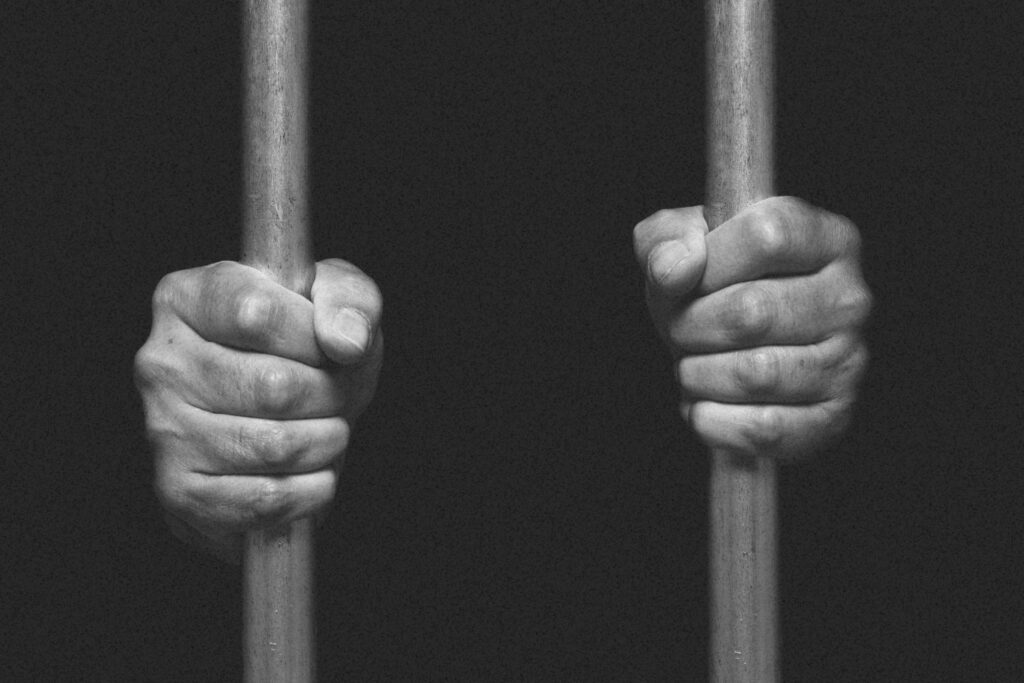
The real prison, then, is not the ego, it’s the investment.
The years of compound interest on a version of yourself you can no longer afford to exit.
Every day you don’t correct the record, the correction becomes more expensive.
Every year you double down, the exit costs more.
At some point, the cost of being wrong is so high that it’s cheaper, psychologically, to be the last person standing in a burning room.
The question worth sitting with isn’t whether someone like this will ever change.
It’s whether you’ve been doing a smaller version of the same thing, in some corner of your own life, for reasons that made sense once.
Most people have.
The difference is in the square footage of the lie.
The Last High
Most addiction books want to help you feel understood. This one wants you to feel responsible. The Last High isn't about substance abuse. It's about escape, and the uncomfortable reality that everyone is escaping something. Written from the inside, without sympathy asked or given.