

There’s a version of this conversation you’ve heard before, it involves courage, a therapist, perhaps a candle.
Someone tells you to sit with the discomfort, to name what haunts you, to breathe through it until it softens.
They’re not wrong, they’re just describing the middle of a story you haven’t started yet, because before any of that, there’s a question you probably can’t answer.
Not because it’s hard, but because you’ve never been willing to stop long enough to hear it.
Who are you? No, not this version.
Not the one you’d give at a dinner table or type into a bio.
The one that lives under all of that.
What do you actually think? What actually moves you?
Forget the answer you’d give your parents, your partner, your oldest friend.
The answer you’d give yourself at three in the morning, in a room with no audience and no face to maintain.
If you don’t know that, and most people don’t, then you have a map and no coordinates.
You know there’s terrain to cross, but you have no idea where you’re standing on it.
This is why most efforts to face what’s inside fail, not because people lack courage, but because they’re aiming at the wrong thing.
They pick a demon that looks familiar, one that’s been named before, one that fits the story they already tell about themselves, and they throw their energy at it.
Meanwhile, what actually runs the show remains untouched, not because it’s hiding, but because they’ve never gone to that part of the house.
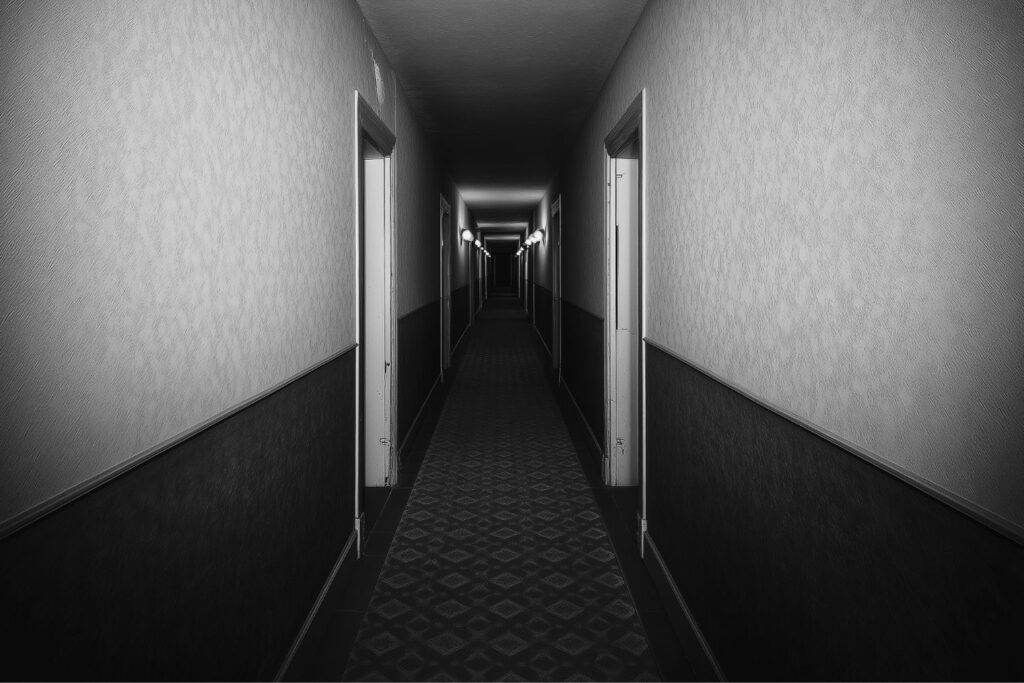
Think about it this way, you’ve lived in your house for years, there are rooms you use every day, rooms you pass through, and a few you stopped entering a long time ago.
Maybe the light didn’t work, or something uncomfortable happened there once, or you simply had no reason to go.
So you didn’t, you kept the door closed, kept moving, kept renovating the parts of the house you preferred to be seen in.
Years pass, you decide to move, and now you have to go in.
You open the door, the air is stale.
Maybe something crosses the threshold when you do, small and startled and not what you expected.
You reach for the light switch. Nothing.
You find a flashlight, change the bulb, and finally get the light on.
What you see is not a monster, it’s the result of absence.
Mold, dust, the ordinary wreckage of a space that was left alone too long.
It’s not dramatic, it’s just neglected, and now it needs to be cleaned.
That’s your demons.
Not a war, a renovation.
But none of that is possible if you never locate yourself first.
Kierkegaard wrote that the most common form of despair is not knowing you’re in despair.
Not recognizing that the person you’ve become is a performance you’ve mistaken for a self.
Most people’s demons aren’t hiding, they’re simply in the room you told yourself you’d get to eventually.
Self-knowledge isn’t a destination, it’s the only accurate starting point.
Without it, what you’re calling inner work is usually just rearranging furniture in the rooms you’ve already made presentable.
The process of finding where you actually are takes time.
It requires conditions you’ve probably been avoiding: silence, stillness, the absence of the feedback loops that normally tell you who you’re supposed to be.
A few days of that, if you’re honest about what you find, will do more than years of effort aimed at the wrong target.
And here’s the thing that might surprise you: the demons themselves, once you can actually see them, are rarely as terrifying as what it costs to avoid them.
They don’t argue, they don’t attack.
They exist because they were left there, in the dark, in the parts of you that you decided didn’t need looking at.
The battle, when it finally comes, is quick.
That’s not a promise about ease, it’s a description of proportion.
The difficulty is almost entirely in the path that leads there, in the willingness to stop performing, to stop misdirecting your energy, to stand still in a room you’ve been avoiding and actually look at what’s there.
Before you can face what’s inside, you have to know where inside is.
Most people never bother, they pick a shadow that’s easy to point to, chase it for years, and wonder why nothing changes.
The light switch was always there.
You just had to walk to the right room.
The Last High
Most addiction books want to help you feel understood. This one wants you to feel responsible. The Last High isn't about substance abuse. It's about escape, and the uncomfortable reality that everyone is escaping something. Written from the inside, without sympathy asked or given.